UX Design
Nudge – A Social Productivity Experience
Exploring how interaction design can influence behavior, encouraging users to follow through without friction.
Year :
2025
Industry :
Social
Project Duration :
1 year
Problem : What was quietly breaking
Tasks weren’t the issue. People were.
Most tools assume that once something is assigned, it moves forward. In reality, things stall in the space between asking and acting.
Nudge sits exactly in that gap - where accountability feels awkward, reminders feel annoying, and motivation fades quickly.
The real problem wasn’t task management.
It was the lack of a system that understands human dynamics ownership, follow-through, and the subtle tension of nudging someone without pushing them away.

Solution : Designing for the uncomfortable middle
Instead of building another task tracker, we reframed the problem: What if accountability felt social, not forced?
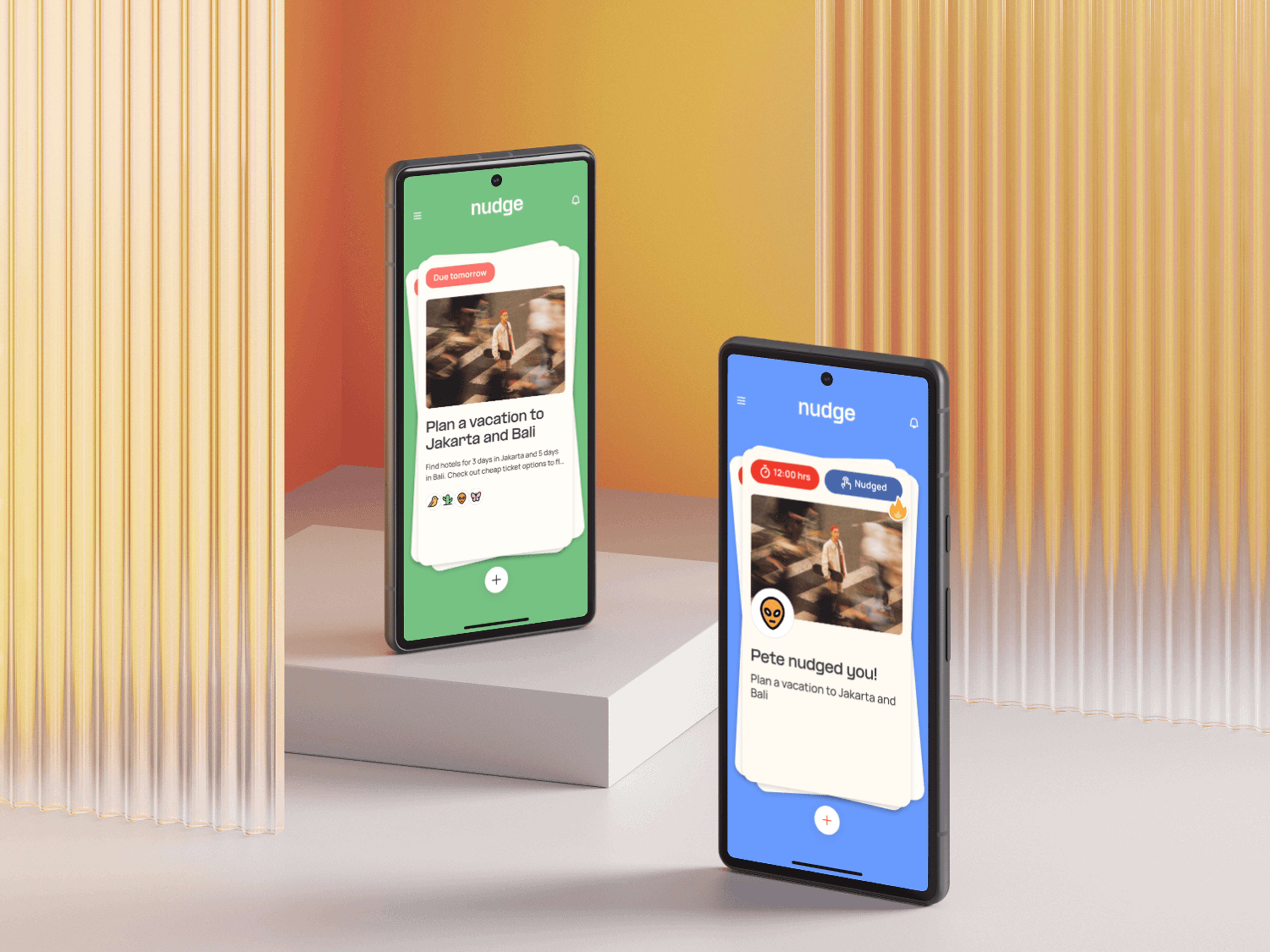
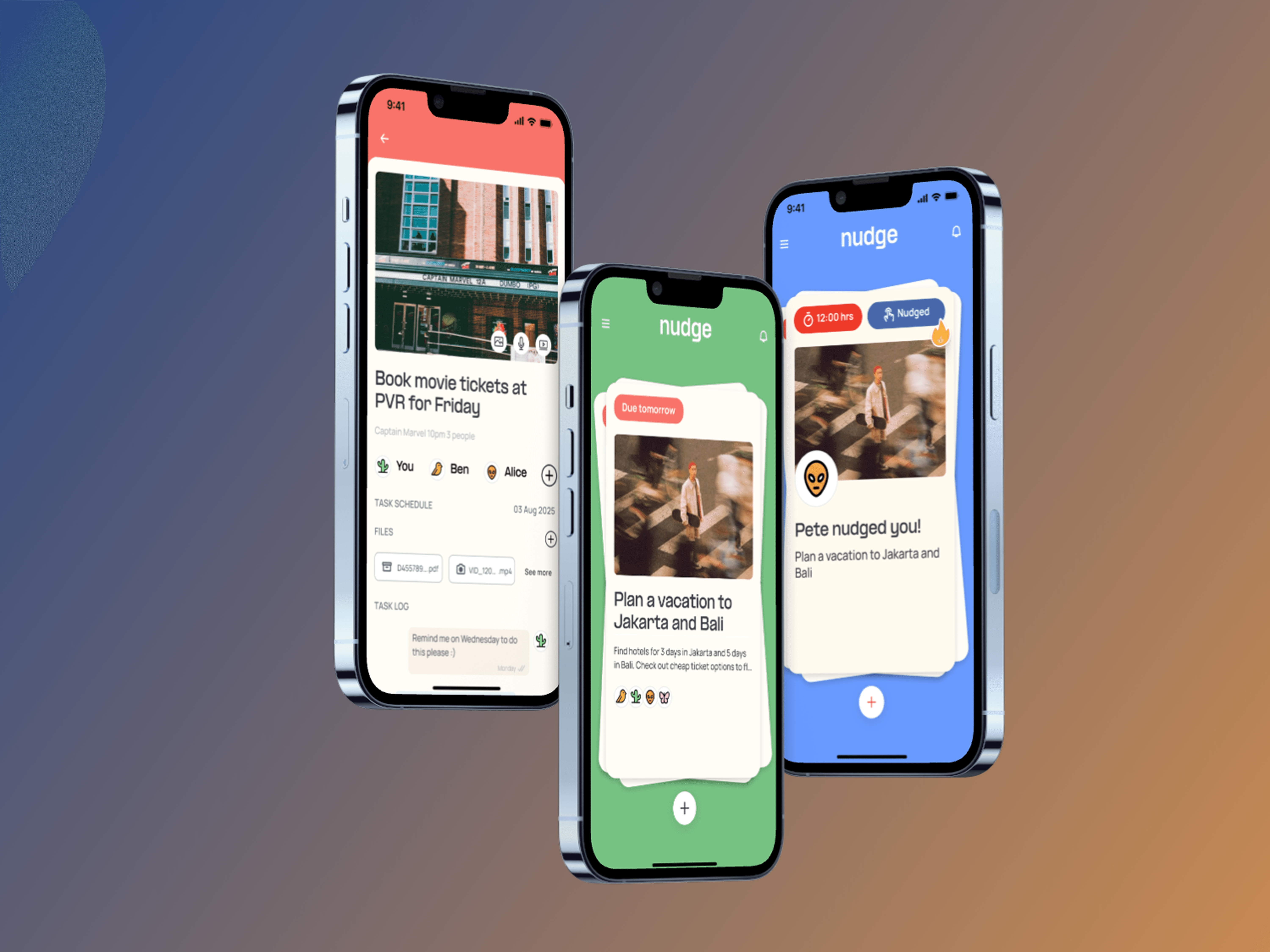
Nudge introduces a shared dynamic where every task has a nudger and a doer. Not just roles, but a relationship.
The experience was shaped around:
making ownership visible without being heavy
turning reminders into interactions, not interruptions
keeping things light enough to engage, but structured enough to follow through
It’s not about managing tasks. It’s about designing the push and pull between people.
Decisions that shaped the product
This project was full of tension.
Should nudges feel playful or serious?
Should accountability be explicit or implied?
How far can you push before it feels intrusive?
We leaned into:
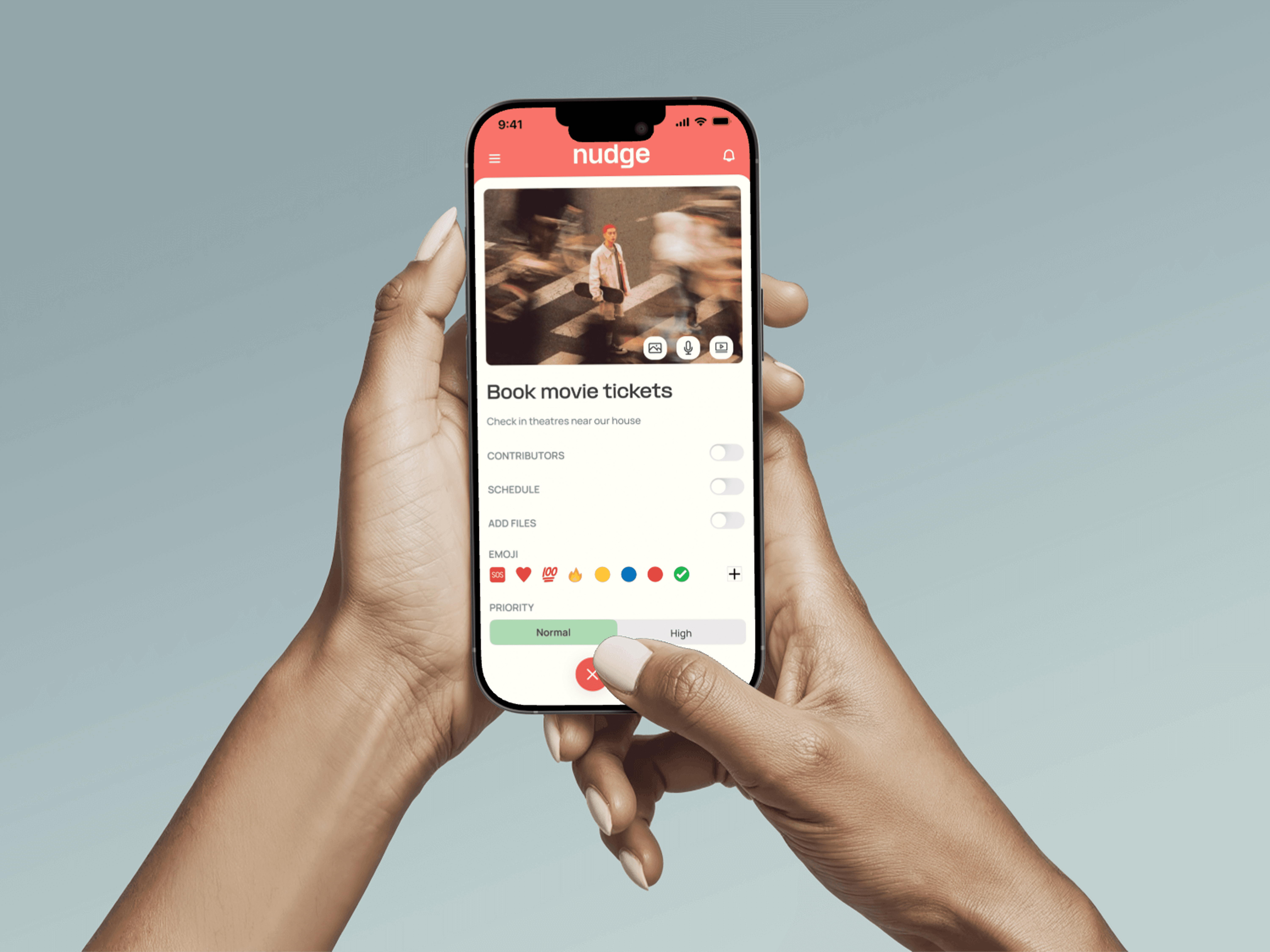
clarity over cleverness when it came to roles and ownership
subtle social cues instead of aggressive notifications
moments of delight only where they reduced friction
And just as importantly, we held back:
no gamification that distracts from intent
no over-layered features that dilute the core interaction
no forced urgency
Every decision was about protecting the balance between motivation and pressure.
Built through constant back-and-forth
This wasn’t designed in isolation. The product evolved through tight loops between design, product thinking, and engineering constraints. Ideas were pushed, challenged, stripped down, and rebuilt.
I worked closely with developers to:
shape flows that were actually feasible, not just ideal
iterate quickly on interaction details that affect behavior
align on where to simplify versus where to go deeper
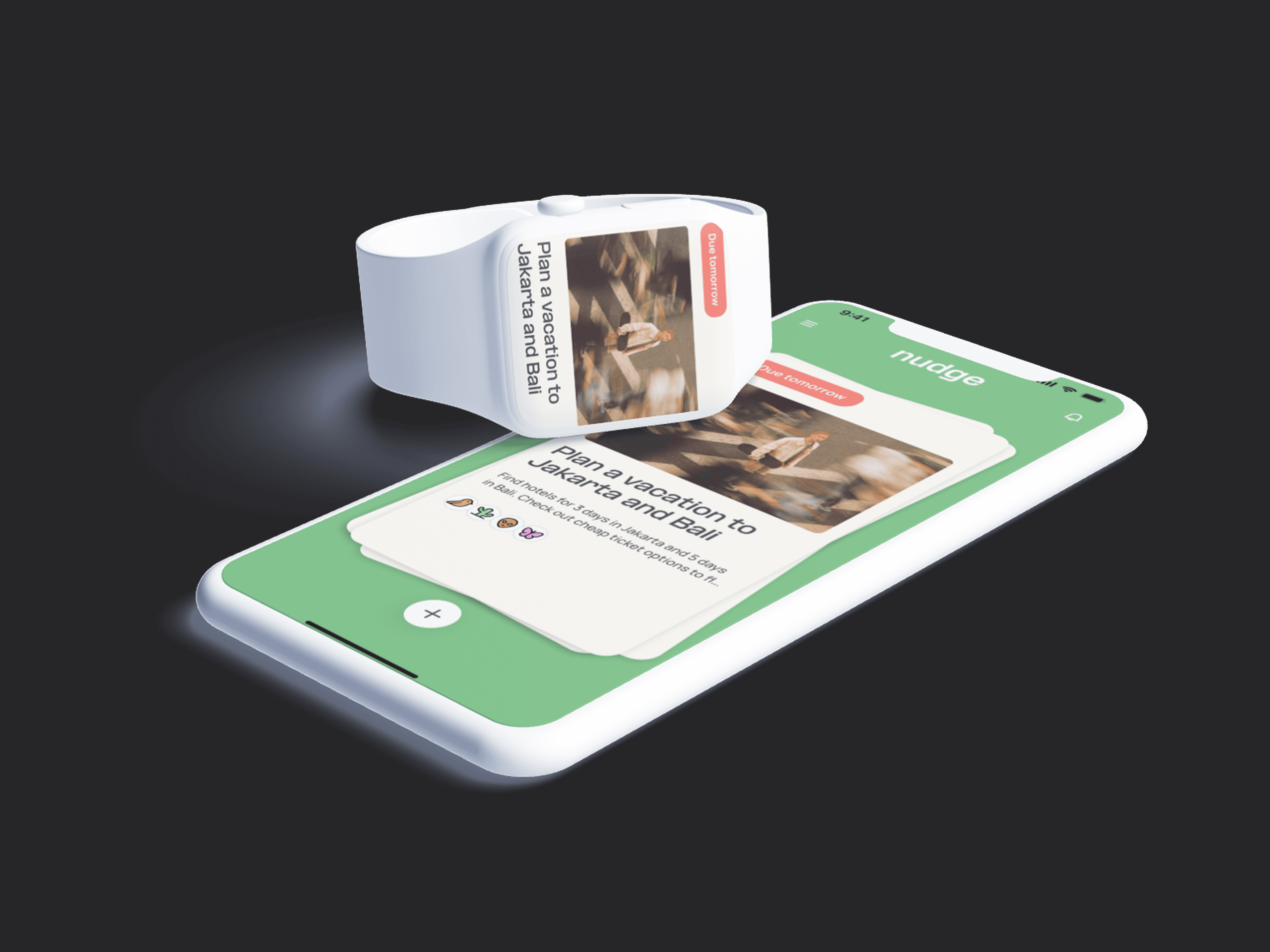
It was less about handing off screens, and more about building a shared understanding of how the product should feel in use.
Beyond the screens
Nudge changed how I think about design.
It made me pay attention to the gap between what users say they’ll do and what they actually follow through on. It pushed me to design for behavior, not just interfaces. More importantly, it taught me how to:
hold strong opinions, but stay open to being wrong
collaborate without losing clarity of thought
design with intention, not just output
This wasn’t just about solving a problem. It was about understanding how people move and designing with that in mind.
More Projects

New release
Preview
UX Design
Nudge – A Social Productivity Experience
Exploring how interaction design can influence behavior, encouraging users to follow through without friction.
Year :
2025
Industry :
Social
Project Duration :
1 year
Problem : What was quietly breaking
Tasks weren’t the issue. People were.
Most tools assume that once something is assigned, it moves forward. In reality, things stall in the space between asking and acting.
Nudge sits exactly in that gap - where accountability feels awkward, reminders feel annoying, and motivation fades quickly.
The real problem wasn’t task management.
It was the lack of a system that understands human dynamics ownership, follow-through, and the subtle tension of nudging someone without pushing them away.
Solution : Designing for the uncomfortable middle
Instead of building another task tracker, we reframed the problem: What if accountability felt social, not forced?
Nudge introduces a shared dynamic where every task has a nudger and a doer. Not just roles, but a relationship.
The experience was shaped around:
making ownership visible without being heavy
turning reminders into interactions, not interruptions
keeping things light enough to engage, but structured enough to follow through
It’s not about managing tasks. It’s about designing the push and pull between people.
Decisions that shaped the product
This project was full of tension.
Should nudges feel playful or serious?
Should accountability be explicit or implied?
How far can you push before it feels intrusive?
We leaned into:
clarity over cleverness when it came to roles and ownership
subtle social cues instead of aggressive notifications
moments of delight only where they reduced friction
And just as importantly, we held back:
no gamification that distracts from intent
no over-layered features that dilute the core interaction
no forced urgency
Every decision was about protecting the balance between motivation and pressure.
Built through constant back-and-forth
This wasn’t designed in isolation. The product evolved through tight loops between design, product thinking, and engineering constraints. Ideas were pushed, challenged, stripped down, and rebuilt.
I worked closely with developers to:
shape flows that were actually feasible, not just ideal
iterate quickly on interaction details that affect behavior
align on where to simplify versus where to go deeper
It was less about handing off screens, and more about building a shared understanding of how the product should feel in use.
Beyond the screens
Nudge changed how I think about design.
It made me pay attention to the gap between what users say they’ll do and what they actually follow through on. It pushed me to design for behavior, not just interfaces. More importantly, it taught me how to:
hold strong opinions, but stay open to being wrong
collaborate without losing clarity of thought
design with intention, not just output
This wasn’t just about solving a problem. It was about understanding how people move and designing with that in mind.
More Projects
New release
Preview
UX Design
Nudge – A Social Productivity Experience
Exploring how interaction design can influence behavior, encouraging users to follow through without friction.
Year :
2025
Industry :
Social
Project Duration :
1 year
Problem : What was quietly breaking
Tasks weren’t the issue. People were.
Most tools assume that once something is assigned, it moves forward. In reality, things stall in the space between asking and acting.
Nudge sits exactly in that gap - where accountability feels awkward, reminders feel annoying, and motivation fades quickly.
The real problem wasn’t task management.
It was the lack of a system that understands human dynamics ownership, follow-through, and the subtle tension of nudging someone without pushing them away.
Solution : Designing for the uncomfortable middle
Instead of building another task tracker, we reframed the problem: What if accountability felt social, not forced?
Nudge introduces a shared dynamic where every task has a nudger and a doer. Not just roles, but a relationship.
The experience was shaped around:
making ownership visible without being heavy
turning reminders into interactions, not interruptions
keeping things light enough to engage, but structured enough to follow through
It’s not about managing tasks. It’s about designing the push and pull between people.
Decisions that shaped the product
This project was full of tension.
Should nudges feel playful or serious?
Should accountability be explicit or implied?
How far can you push before it feels intrusive?
We leaned into:
clarity over cleverness when it came to roles and ownership
subtle social cues instead of aggressive notifications
moments of delight only where they reduced friction
And just as importantly, we held back:
no gamification that distracts from intent
no over-layered features that dilute the core interaction
no forced urgency
Every decision was about protecting the balance between motivation and pressure.
Built through constant back-and-forth
This wasn’t designed in isolation. The product evolved through tight loops between design, product thinking, and engineering constraints. Ideas were pushed, challenged, stripped down, and rebuilt.
I worked closely with developers to:
shape flows that were actually feasible, not just ideal
iterate quickly on interaction details that affect behavior
align on where to simplify versus where to go deeper
It was less about handing off screens, and more about building a shared understanding of how the product should feel in use.
Beyond the screens
Nudge changed how I think about design.
It made me pay attention to the gap between what users say they’ll do and what they actually follow through on. It pushed me to design for behavior, not just interfaces. More importantly, it taught me how to:
hold strong opinions, but stay open to being wrong
collaborate without losing clarity of thought
design with intention, not just output
This wasn’t just about solving a problem. It was about understanding how people move and designing with that in mind.
More Projects
New release
Preview