UX Design
Traveltribe
Helping women navigate new places with more confidence, clarity, and community.
Year :
2024
Industry :
Travel
Project Duration :
5 months
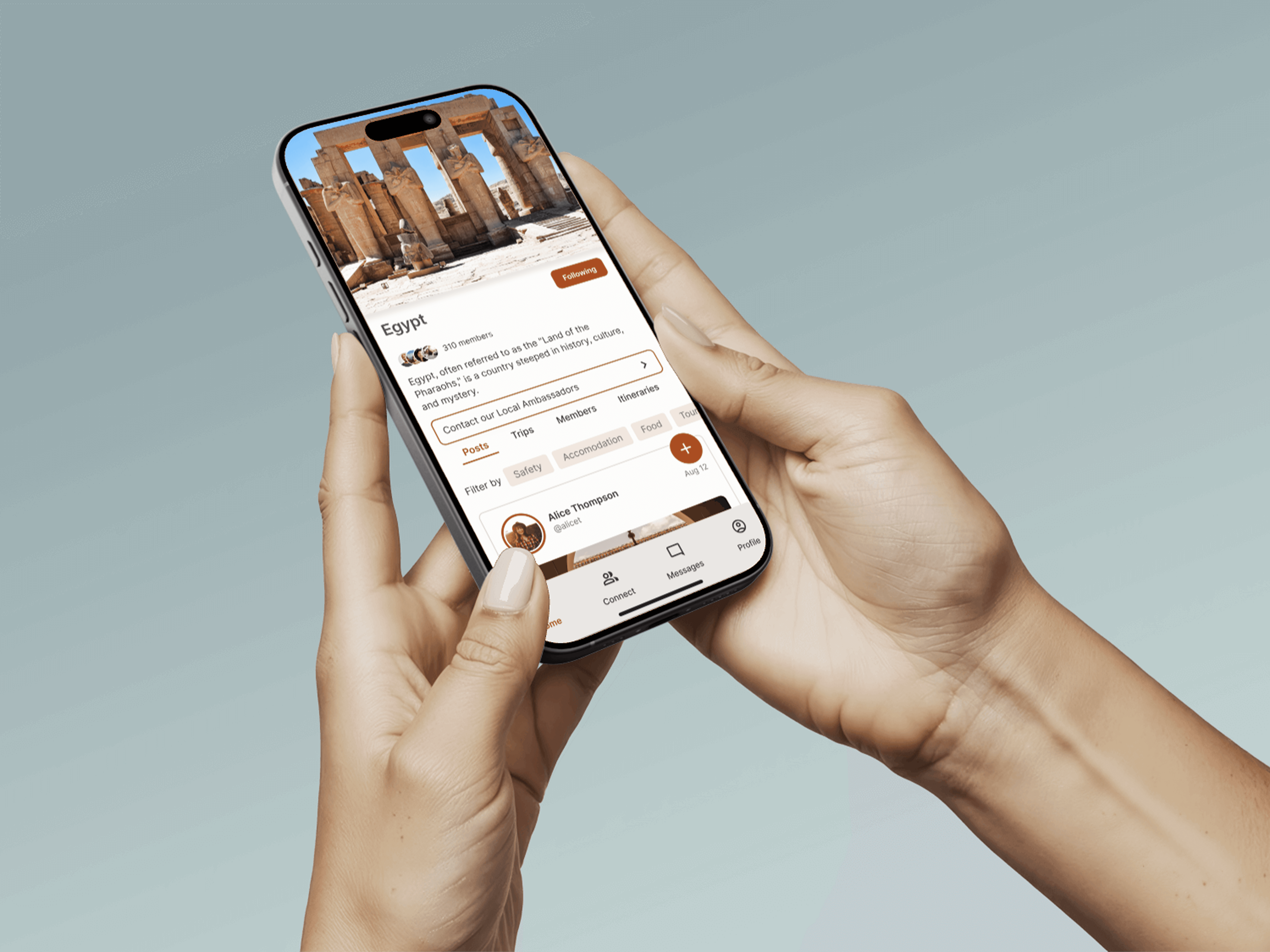
What wasn’t working
Solo travelers rely on multiple tools to plan, stay safe, and connect.
Information is scattered across blogs, apps, and communities. Support is inconsistent. And finding trustworthy, relevant guidance takes effort.
The gap wasn’t lack of resources.
It was the absence of a structured system that brings safety, support, and connection together.
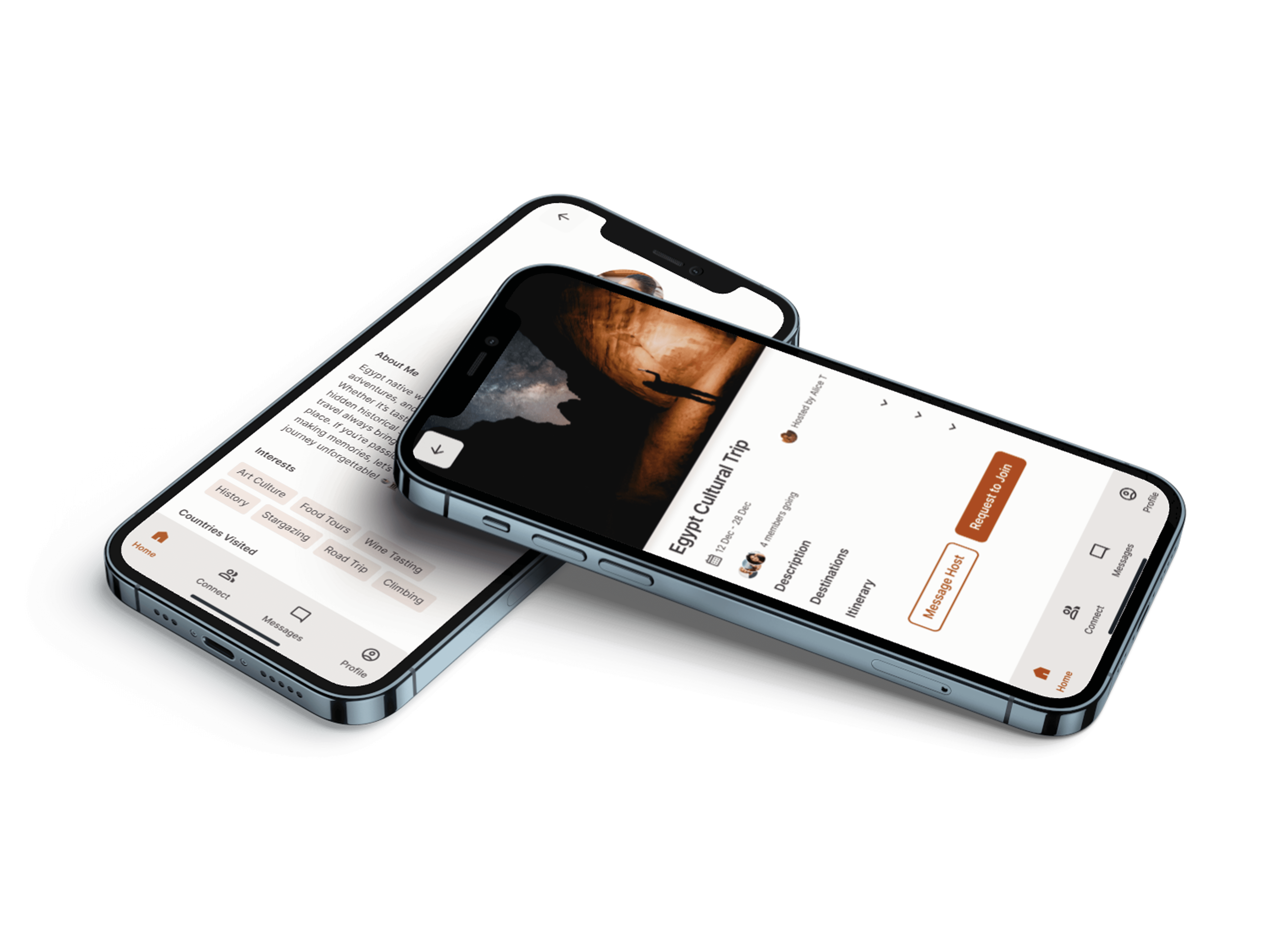
Designing an integrated experience
The platform was designed to combine three core needs:
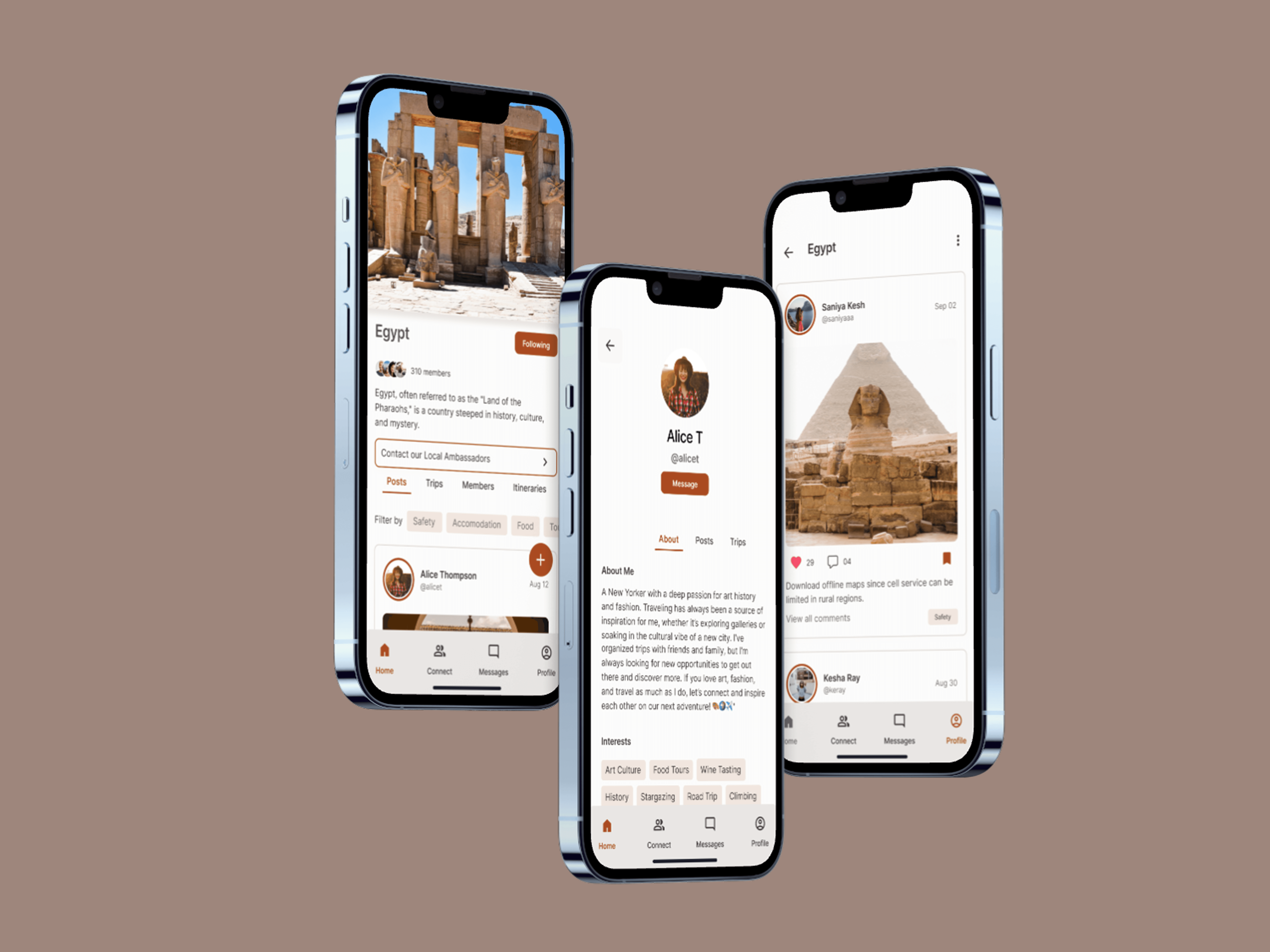
access to structured, destination-specific information
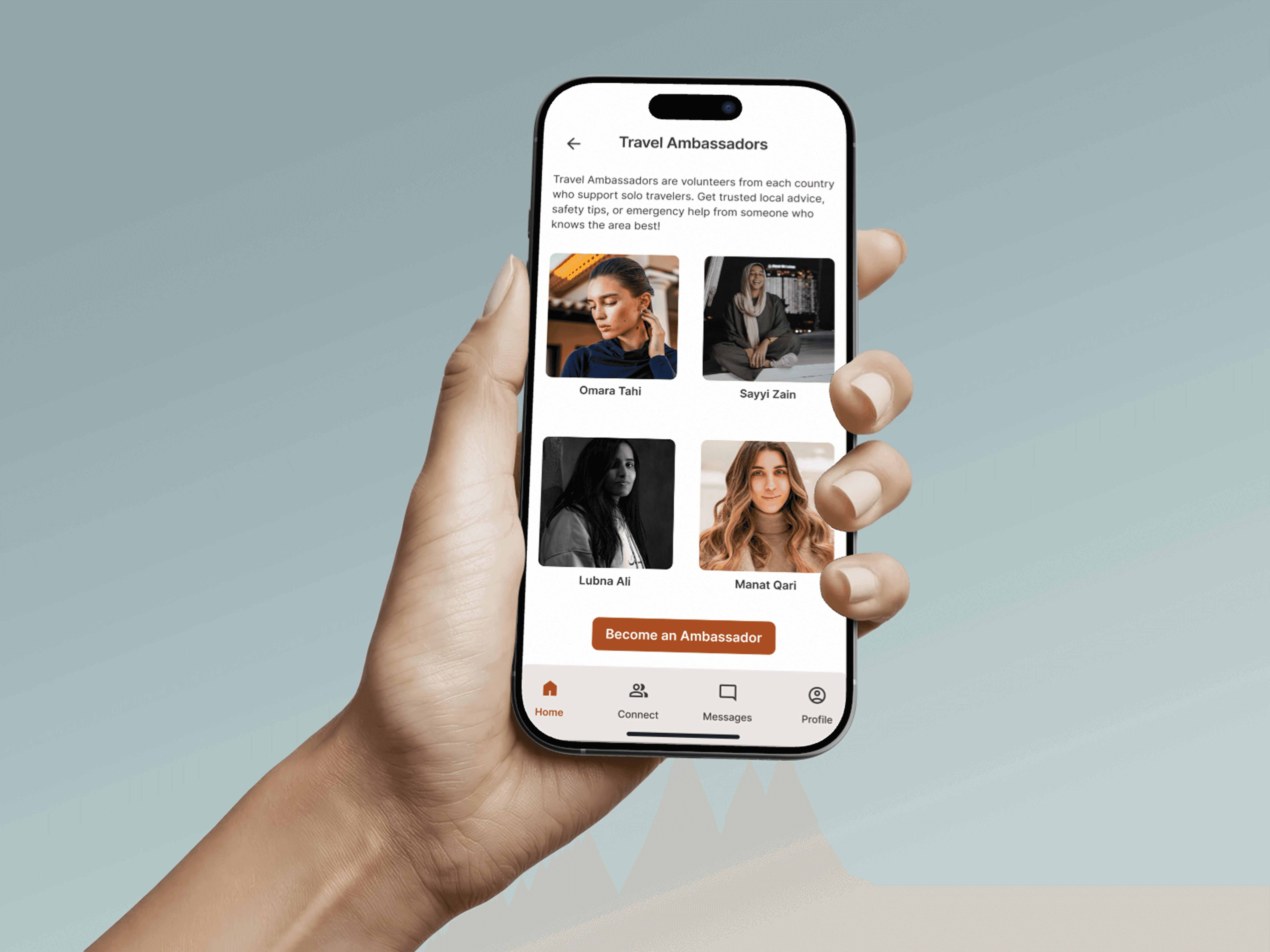
reliable local support through ambassadors
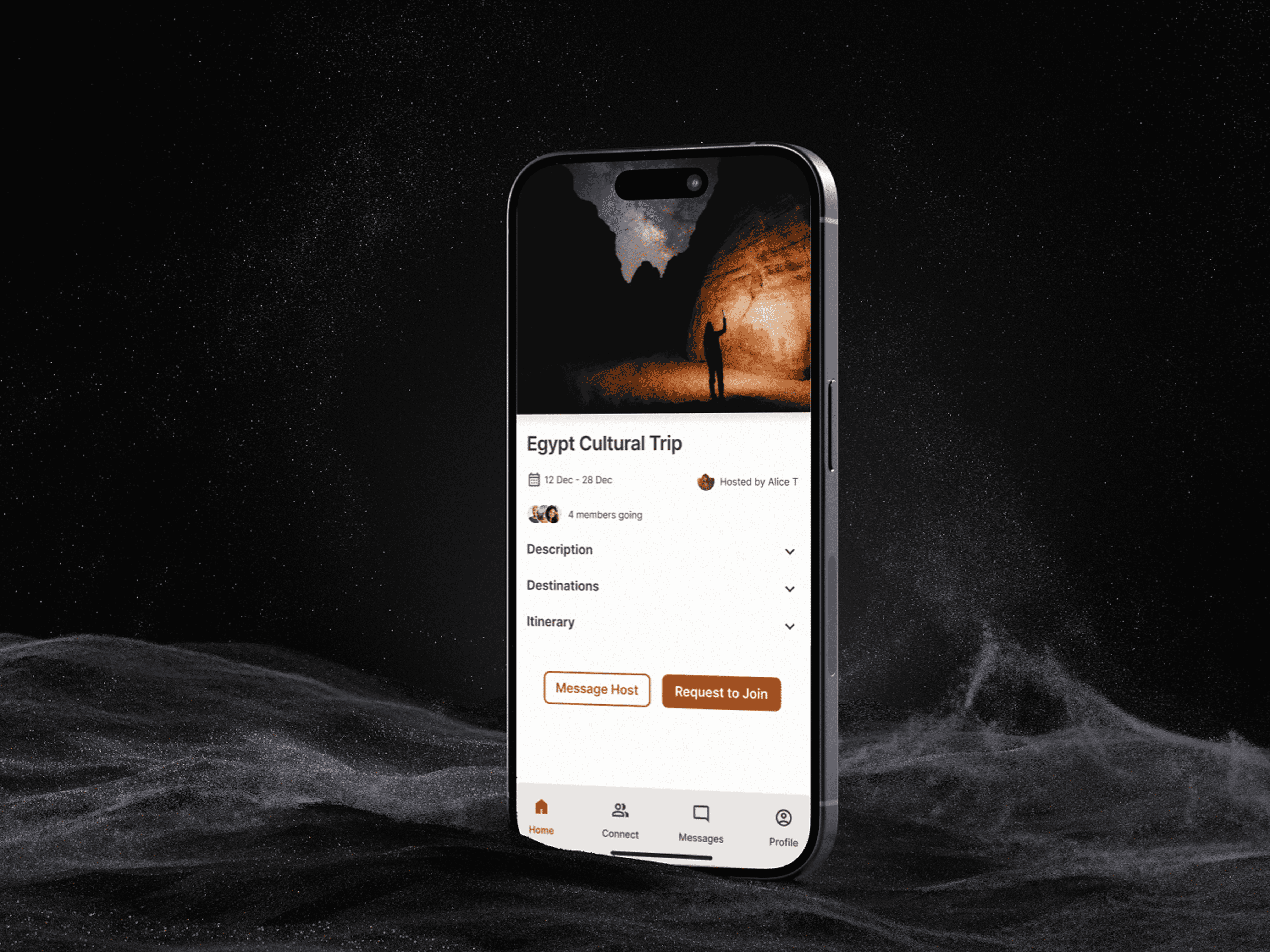
opportunities to connect through groups and shared trips
Each feature addresses a specific gap identified in research.
The goal was to reduce the effort required to plan, navigate, and connect by bringing everything into a single, cohesive experience.
Key design decisions
The main challenge was balancing multiple needs without increasing complexity.
Key decisions included:
introducing visible filters instead of hidden search to improve discoverability
clearly defining the role of local ambassadors to build trust
structuring content by destination and interest to reduce cognitive load
The focus was on clarity and usability, especially for users in unfamiliar environments.
Research and iteration
User interviews highlighted recurring issues around safety, planning, and connection.
These insights directly informed feature decisions. Usability testing helped identify friction in navigation and understanding.
Iterations focused on:
simplifying flows
improving feature clarity
reducing confusion around key concepts like ambassadors
The process ensured that decisions were grounded in actual user behavior.
What this shaped in me
This was my first UX project, and it changed how I think.
I came in trying to design features. I left understanding that the real work is defining the problem.It forced me to move beyond assumptions. To listen, structure, and make decisions that actually hold up.
More than anything, it made one thing clear. This is the kind of problem I want to keep working on.
More Projects

New release
Preview
UX Design
Traveltribe
Helping women navigate new places with more confidence, clarity, and community.
Year :
2024
Industry :
Travel
Project Duration :
5 months
What wasn’t working
Solo travelers rely on multiple tools to plan, stay safe, and connect.
Information is scattered across blogs, apps, and communities. Support is inconsistent. And finding trustworthy, relevant guidance takes effort.
The gap wasn’t lack of resources.
It was the absence of a structured system that brings safety, support, and connection together.
Designing an integrated experience
The platform was designed to combine three core needs:
access to structured, destination-specific information
reliable local support through ambassadors
opportunities to connect through groups and shared trips
Each feature addresses a specific gap identified in research.
The goal was to reduce the effort required to plan, navigate, and connect by bringing everything into a single, cohesive experience.
Key design decisions
The main challenge was balancing multiple needs without increasing complexity.
Key decisions included:
introducing visible filters instead of hidden search to improve discoverability
clearly defining the role of local ambassadors to build trust
structuring content by destination and interest to reduce cognitive load
The focus was on clarity and usability, especially for users in unfamiliar environments.
Research and iteration
User interviews highlighted recurring issues around safety, planning, and connection.
These insights directly informed feature decisions. Usability testing helped identify friction in navigation and understanding.
Iterations focused on:
simplifying flows
improving feature clarity
reducing confusion around key concepts like ambassadors
The process ensured that decisions were grounded in actual user behavior.
What this shaped in me
This was my first UX project, and it changed how I think.
I came in trying to design features. I left understanding that the real work is defining the problem.It forced me to move beyond assumptions. To listen, structure, and make decisions that actually hold up.
More than anything, it made one thing clear. This is the kind of problem I want to keep working on.
More Projects
New release
Preview
UX Design
Traveltribe
Helping women navigate new places with more confidence, clarity, and community.
Year :
2024
Industry :
Travel
Project Duration :
5 months
What wasn’t working
Solo travelers rely on multiple tools to plan, stay safe, and connect.
Information is scattered across blogs, apps, and communities. Support is inconsistent. And finding trustworthy, relevant guidance takes effort.
The gap wasn’t lack of resources.
It was the absence of a structured system that brings safety, support, and connection together.
Designing an integrated experience
The platform was designed to combine three core needs:
access to structured, destination-specific information
reliable local support through ambassadors
opportunities to connect through groups and shared trips
Each feature addresses a specific gap identified in research.
The goal was to reduce the effort required to plan, navigate, and connect by bringing everything into a single, cohesive experience.
Key design decisions
The main challenge was balancing multiple needs without increasing complexity.
Key decisions included:
introducing visible filters instead of hidden search to improve discoverability
clearly defining the role of local ambassadors to build trust
structuring content by destination and interest to reduce cognitive load
The focus was on clarity and usability, especially for users in unfamiliar environments.
Research and iteration
User interviews highlighted recurring issues around safety, planning, and connection.
These insights directly informed feature decisions. Usability testing helped identify friction in navigation and understanding.
Iterations focused on:
simplifying flows
improving feature clarity
reducing confusion around key concepts like ambassadors
The process ensured that decisions were grounded in actual user behavior.
What this shaped in me
This was my first UX project, and it changed how I think.
I came in trying to design features. I left understanding that the real work is defining the problem.It forced me to move beyond assumptions. To listen, structure, and make decisions that actually hold up.
More than anything, it made one thing clear. This is the kind of problem I want to keep working on.
More Projects
New release
Preview