UX Design
Entrepreneur Journey
A concept-stage platform designed to help early-stage entrepreneurs find direction, identify collaborators, and take actionable next steps
Year :
2025
Client :
MyEdMaster
Project Duration :
4 weeks
When the problem isn’t fully defined
The project came with a problem statement, but not a product.
The client had a vision of what the platform could feel like, supported by a vision board. But there was no clear structure, flow, or defined experience.
The challenge wasn’t solving a known problem. It was translating an early idea into something more concrete. Understanding what this platform could become was the first step before designing it.
Turning vision into a usable experience
Instead of jumping into features, the focus was on defining direction.
We worked on:
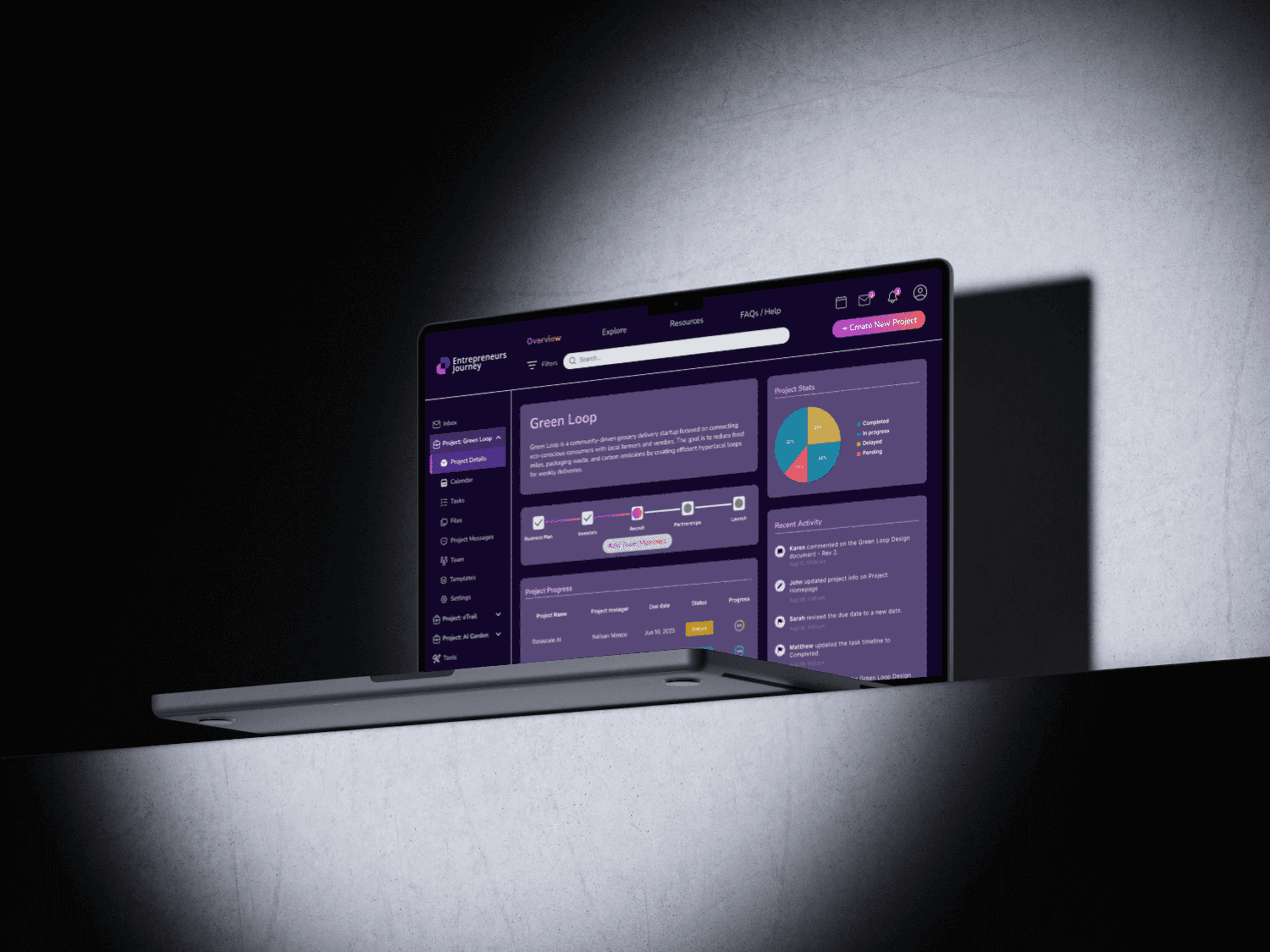
structuring how an entrepreneur moves through the platform
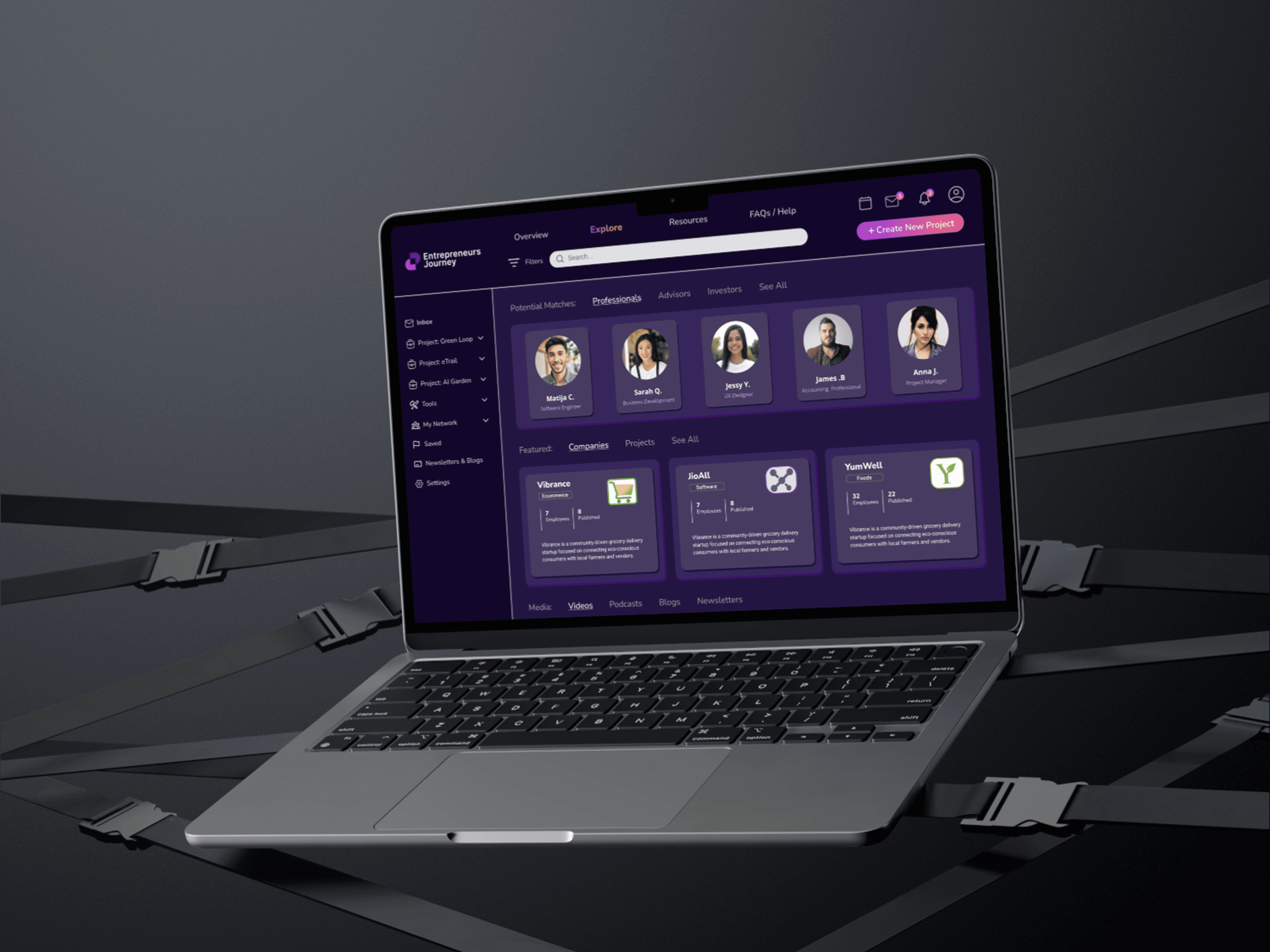
identifying key moments like discovering direction, finding collaborators, and taking action
shaping how the experience should feel simple, guided, but not restrictive
The outcome wasn’t an MVP. It was a clearer sense of what the product should be.
Giving structure without over-defining
The main challenge was working with limited clarity.
We had to decide:
how much guidance to provide without making it rigid
how to translate a visual vision into actual flows
what to prioritize when everything still felt open-ended
We focused on:
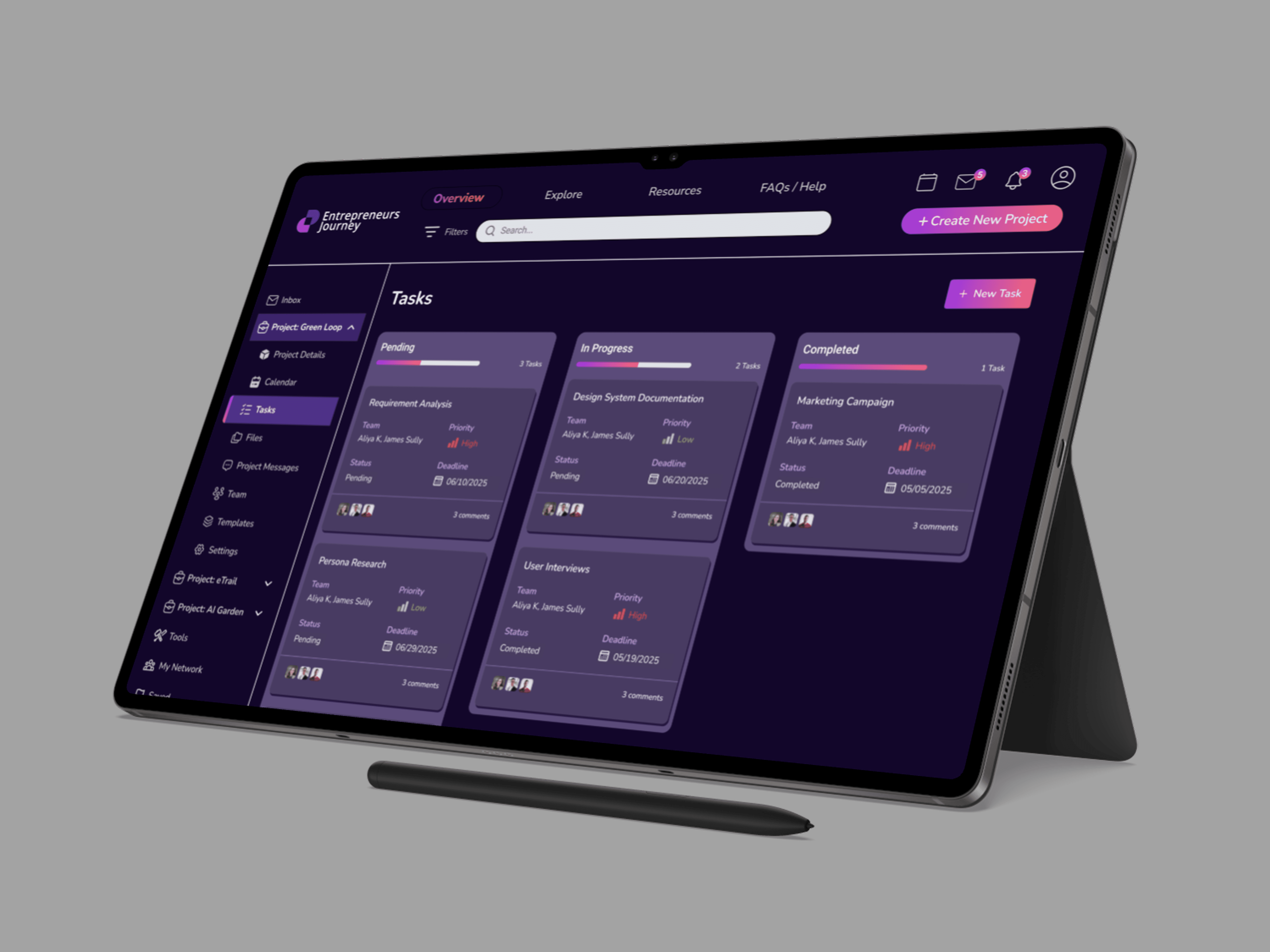
creating a flexible journey instead of fixed steps
keeping interactions lightweight to avoid overwhelming early-stage users
aligning design decisions with the core idea of helping users move forward
Working with a client and a team
This project involved constant alignment between the team and the client.
Ideas were shared, interpreted, and refined through discussions and feedback.
The vision board acted as a reference point, but translating it into a product required multiple iterations.
My role involved:
converting abstract ideas into structured flows
ensuring consistency across different parts of the experience
iterating based on feedback while maintaining clarity in direction
It was less about execution, and more about making sure everyone was moving toward the same product vision.
Designing before the product exists
This project showed me that design doesn’t always start with a defined product. Sometimes the work is in shaping what the product could be.
I learned how to take abstract inputs like a problem statement and vision board and turn them into something more structured and actionable. It also pushed me to think beyond screens. To focus on direction, flow, and how the product should evolve over time.
This was less about building a solution, and more about defining one.
More Projects

New release
Preview
UX Design
Entrepreneur Journey
A concept-stage platform designed to help early-stage entrepreneurs find direction, identify collaborators, and take actionable next steps
Year :
2025
Client :
MyEdMaster
Project Duration :
4 weeks
When the problem isn’t fully defined
The project came with a problem statement, but not a product.
The client had a vision of what the platform could feel like, supported by a vision board. But there was no clear structure, flow, or defined experience.
The challenge wasn’t solving a known problem. It was translating an early idea into something more concrete. Understanding what this platform could become was the first step before designing it.
Turning vision into a usable experience
Instead of jumping into features, the focus was on defining direction.
We worked on:
structuring how an entrepreneur moves through the platform
identifying key moments like discovering direction, finding collaborators, and taking action
shaping how the experience should feel simple, guided, but not restrictive
The outcome wasn’t an MVP. It was a clearer sense of what the product should be.
Giving structure without over-defining
The main challenge was working with limited clarity.
We had to decide:
how much guidance to provide without making it rigid
how to translate a visual vision into actual flows
what to prioritize when everything still felt open-ended
We focused on:
creating a flexible journey instead of fixed steps
keeping interactions lightweight to avoid overwhelming early-stage users
aligning design decisions with the core idea of helping users move forward
Working with a client and a team
This project involved constant alignment between the team and the client.
Ideas were shared, interpreted, and refined through discussions and feedback.
The vision board acted as a reference point, but translating it into a product required multiple iterations.
My role involved:
converting abstract ideas into structured flows
ensuring consistency across different parts of the experience
iterating based on feedback while maintaining clarity in direction
It was less about execution, and more about making sure everyone was moving toward the same product vision.
Designing before the product exists
This project showed me that design doesn’t always start with a defined product. Sometimes the work is in shaping what the product could be.
I learned how to take abstract inputs like a problem statement and vision board and turn them into something more structured and actionable. It also pushed me to think beyond screens. To focus on direction, flow, and how the product should evolve over time.
This was less about building a solution, and more about defining one.
More Projects
New release
Preview
UX Design
Entrepreneur Journey
A concept-stage platform designed to help early-stage entrepreneurs find direction, identify collaborators, and take actionable next steps
Year :
2025
Client :
MyEdMaster
Project Duration :
4 weeks
When the problem isn’t fully defined
The project came with a problem statement, but not a product.
The client had a vision of what the platform could feel like, supported by a vision board. But there was no clear structure, flow, or defined experience.
The challenge wasn’t solving a known problem. It was translating an early idea into something more concrete. Understanding what this platform could become was the first step before designing it.
Turning vision into a usable experience
Instead of jumping into features, the focus was on defining direction.
We worked on:
structuring how an entrepreneur moves through the platform
identifying key moments like discovering direction, finding collaborators, and taking action
shaping how the experience should feel simple, guided, but not restrictive
The outcome wasn’t an MVP. It was a clearer sense of what the product should be.
Giving structure without over-defining
The main challenge was working with limited clarity.
We had to decide:
how much guidance to provide without making it rigid
how to translate a visual vision into actual flows
what to prioritize when everything still felt open-ended
We focused on:
creating a flexible journey instead of fixed steps
keeping interactions lightweight to avoid overwhelming early-stage users
aligning design decisions with the core idea of helping users move forward
Working with a client and a team
This project involved constant alignment between the team and the client.
Ideas were shared, interpreted, and refined through discussions and feedback.
The vision board acted as a reference point, but translating it into a product required multiple iterations.
My role involved:
converting abstract ideas into structured flows
ensuring consistency across different parts of the experience
iterating based on feedback while maintaining clarity in direction
It was less about execution, and more about making sure everyone was moving toward the same product vision.
Designing before the product exists
This project showed me that design doesn’t always start with a defined product. Sometimes the work is in shaping what the product could be.
I learned how to take abstract inputs like a problem statement and vision board and turn them into something more structured and actionable. It also pushed me to think beyond screens. To focus on direction, flow, and how the product should evolve over time.
This was less about building a solution, and more about defining one.
More Projects
New release
Preview